


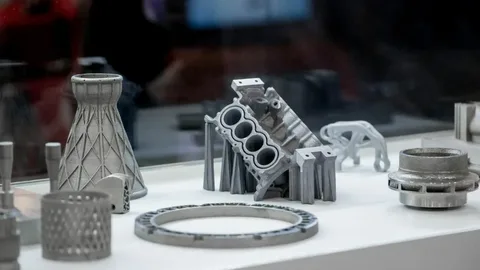
The global market for 3D printed parts is expanding rapidly, fueled by technological advancements, changing manufacturing needs, and increasing demand for customization. From aerospace to healthcare and consumer products, 3D printing—also known as additive manufacturing—is reshaping how parts are designed, produced, and delivered. Below are the key trends currently driving sales in this dynamic industry.
1. Rising Demand for Customization and Personalization
One of the biggest advantages of 3D printing is its ability to create highly customized products without significant cost increases. Consumers and businesses alike are seeking personalized solutions, whether it’s custom prosthetics, tailored automotive components, or unique consumer goods.
This trend is particularly evident in niche markets where traditional manufacturing falls short. For instance, enthusiasts seeking specialized components, such as those related to Polymer 80, often turn to 3D printing for flexibility and precision in customization.
2. Growth in Rapid Prototyping
Rapid prototyping remains a major driver of 3D printing adoption. Companies can quickly design, test, and refine products without the need for expensive molds or tooling. This accelerates product development cycles and reduces time-to-market.
Industries like automotive and aerospace heavily rely on this capability to stay competitive. Even small businesses and independent creators are leveraging 3D printing to bring ideas to life efficiently, including projects involving Polymer 80-compatible parts.
3. Advancements in Materials
The range of materials available for 3D printing has expanded significantly. Today, manufacturers can print using high-performance polymers, metals, ceramics, and even bio-materials. These innovations are enabling the production of stronger, lighter, and more durable parts.
For example, improved polymer blends have made it easier to produce functional components that meet industry standards. This has also contributed to the growing interest in Polymer 80 applications, where material strength and reliability are crucial.
4. Increased Adoption in Healthcare
Healthcare is one of the fastest-growing sectors for 3D printed parts. Applications include custom implants, surgical tools, dental devices, and prosthetics. The ability to create patient-specific solutions is revolutionizing treatment outcomes.
Hospitals and labs are increasingly investing in in-house 3D printing capabilities, which reduces costs and improves efficiency. This trend continues to boost demand for specialized printed components.
5. Supply Chain Optimization
Global supply chain disruptions have pushed companies to explore localized manufacturing solutions. 3D printing allows businesses to produce parts on demand, reducing the need for large inventories and long shipping times.
This decentralized approach enhances resilience and flexibility, particularly for industries that require quick turnaround times or deal with hard-to-source components.
6. Expansion of Desktop and Industrial 3D Printers
The accessibility of 3D printing technology has improved dramatically. Desktop printers have become more affordable and user-friendly, while industrial machines are becoming more powerful and efficient.
This dual growth is expanding the user base—from hobbyists to large-scale manufacturers—further driving sales of 3D printed parts. Communities focused on DIY manufacturing, including those working with Polymer 80 frameworks, are benefiting from this accessibility.
7. Sustainability and Waste Reduction
Sustainability is becoming a key consideration in manufacturing. 3D printing minimizes material waste by using only the necessary amount of raw material. Additionally, it supports recycling initiatives and reduces the carbon footprint associated with traditional production methods.
As companies strive to meet environmental goals, additive manufacturing is emerging as a more sustainable alternative.
Conclusion
The sales of 3D printed parts are being propelled by a combination of innovation, efficiency, and evolving market demands. From customization and rapid prototyping to material advancements and supply chain improvements, these trends are reshaping the manufacturing landscape.
As technology continues to evolve, the role of 3D printing will only grow stronger—offering new opportunities for businesses, creators, and industries worldwide.
