


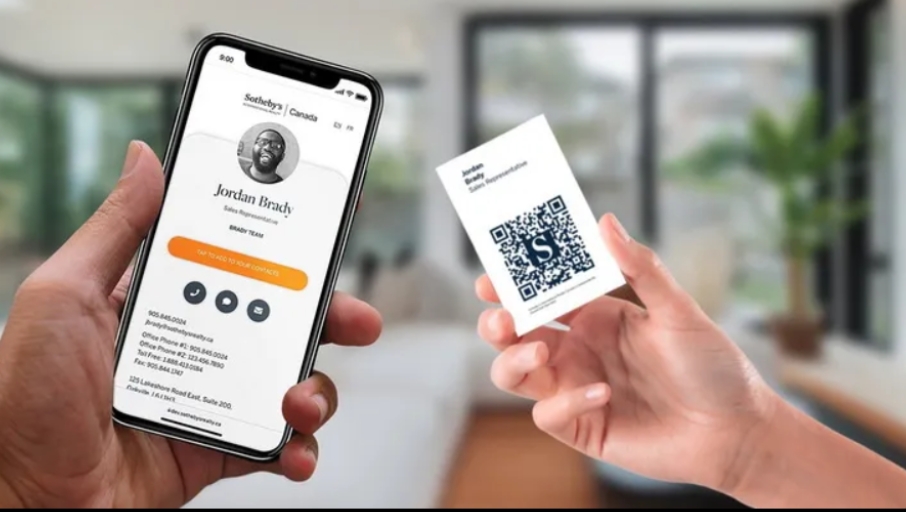
Running a small business usually means doing a dozen different jobs yourself, and marketing polish tends to fall somewhere near the bottom of that list, well below actually delivering the work your clients are paying for. Business cards, in particular, are the kind of thing that gets ordered once, in a bit of a rush, and then rarely thought about again until the box runs low or the details on them are noticeably out of date. Digital business cards offer small businesses a way to sidestep that entire cycle, but a common assumption is that this kind of tool is really built for larger companies with dedicated marketing teams and bigger budgets.
In practice, it’s often small businesses that stand to benefit the most, simply because every dollar saved and every minute of admin work removed matters more when you’re running things largely on your own. This guide walks through how small businesses can realistically put digital business cards to use, without needing any special technical skill or a significant budget to get started.
Replacing a Cycle of Reprints With Something You Control Yourself
Anyone who’s run a small business for more than a couple of years has likely gone through the mildly annoying process of reordering printed cards because something changed — a new phone number, a different address, a slightly updated logo, or simply running low on stock. Each time this happens, there’s a design step, an approval step, a shipping wait, and a cost that, while modest on its own, adds up steadily the longer you’re in business.
A digital business card mostly removes this cycle. You update your profile directly whenever something changes, and that update applies immediately to anyone who taps or scans your card afterward, without a single physical item needing to be reprinted or thrown away. For a small business owner already managing a long list of responsibilities, eliminating this one recurring task tends to be a genuinely appreciated relief, even if it seems minor at first glance.
Making a Small Operation Feel More Established
One particular advantage for very small businesses — freelancers, solo consultants, or one- or two-person operations — is how a well-built digital profile can make a business feel more established than its size might otherwise suggest. A printed card only fits a name, a phone number, and maybe a short tagline. A digital profile can include a short description of what the business actually does, a few examples of past work, client testimonials, and a direct way to book a call or send a message.
For a solo business owner meeting a potential client for the first time, that fuller picture can genuinely shift the impression from “someone doing freelance work on the side” to “a business worth taking seriously,” without requiring anything beyond a bit of thoughtful setup up front.
Using It as a Lightweight Substitute for a Sales System
Many small businesses don’t have a dedicated sales team, a formal CRM, or a structured follow-up process, and often rely on fairly informal methods after meeting a potential client — a text message, a follow-up email, or simply hoping the other person reaches out first. A digital business card can quietly improve this by including a direct booking link, so anyone interested can schedule time on your calendar right after tapping your card, without needing you to personally chase them down first.
This is particularly useful when the business owner is also the one handling most client interactions personally. Rather than juggling scheduling back and forth by text or email, a simple “Book a Call” button on your profile removes a step and often speeds up how quickly a new contact actually turns into a booked conversation.
Getting a Clearer Sense of What’s Actually Working
Small businesses often rely heavily on local markets, community events, small trade shows, or general face-to-face networking to build a client base, but rarely have a reliable way of knowing which of these efforts are actually paying off. A digital business card with basic tracking can offer real insight here — showing how many people tapped your card at a particular event, or whether a specific weekend market generated noticeably more engagement than another one.
This kind of information doesn’t need to be sophisticated to be useful. Even a rough sense of “this event led to real interest, that one didn’t” can help a small business owner decide where to spend limited time and energy going forward, rather than continuing to guess.
Keeping a Small Team Consistent Without Much Effort
Even a business with just a handful of employees can run into the same branding inconsistency that larger companies deal with — one employee’s card looks slightly different from another’s, someone’s still handing out an old design, and the overall impression starts to feel a bit patchwork rather than unified. A shared digital template solves this fairly easily, even at a small scale. Every employee’s card pulls from the same base design, so a business with three or four people still comes across as a cohesive, professional operation rather than a loosely connected group of individuals doing their own thing.
Weighing the Cost Against What It Actually Replaces
Cost is usually one of the first things a small business owner considers before adopting anything new, and it’s worth being upfront that digital business cards aren’t always free — there’s typically a modest cost for the physical card itself, and sometimes a small ongoing fee depending on the platform and the features involved. That said, when weighed against the repeated cost of reprinting paper cards every time something changes, many small businesses find that a single digital card pays for itself within the first year or so, simply by removing the need for reordering altogether.
The table below gives a rough sense of how the two approaches tend to compare over time for a typical small business.
|
Consideration |
Traditional Paper Cards |
Digital Business Card |
|
Cost when details change |
Full reprint required |
Update instantly, no extra cost |
|
Time to update information |
Days to weeks (design, print, ship) |
A few minutes |
|
Consistency across a small team |
Depends on manual reordering |
Maintained automatically via shared template |
|
Tracking engagement |
Not possible |
Basic view/tap tracking available |
|
Physical waste over time |
Accumulates with every reprint |
Minimal, since the card is reusable |
|
Setup effort |
Low, but repeated often |
Slightly higher upfront, then largely hands-off |
For businesses that are especially budget-conscious, some platforms also offer purely digital options with no physical card at all — just a shareable link or QR code — which can be a reasonable starting point for a very small operation testing out the idea before committing to anything printed.
Fitting Naturally Into How Small Businesses Already Network
A large share of small business growth happens through word of mouth, local events, and casual introductions rather than formal sales processes, and a digital business card fits naturally into that kind of environment. Handing someone a card at a local market, a community event, or even a casual conversation at a coffee shop works exactly the same way it always has — the only difference is a quicker, slightly more modern exchange happening at the end of it. It doesn’t require changing how a small business already operates; it simply makes one small, recurring part of that process a bit smoother.
Starting Simple Tends to Work Best
For small business owners who are curious but a little hesitant, it’s worth mentioning that you don’t need to build an elaborate profile right away to get real value out of a digital business card. Starting with just your name, a short description of what you do, your contact details, and a single relevant link is often more than enough to see a genuine benefit, with plenty of room to add more later as you get comfortable with how the platform works. Trying to build the “perfect” profile before ever actually using the card tends to slow things down unnecessarily, when a simple, functional version is usually good enough to start getting value from immediately.
Thinking About Growth Before You Need To
One advantage worth planning for, even if your business is currently very small, is how easily digital business cards scale if you eventually hire employees or bring on a partner. Setting up a system now that supports adding people later — rather than starting with something purely individual and having to switch platforms down the line — can save a bit of hassle if your business grows faster than expected. This doesn’t need to change anything about how you use the card today; it’s more a matter of choosing a provider that won’t box you in if your team grows from one person to several.
Frequently Asked Questions
Is a digital business card worth it for a business with just one or two people? Often, yes. Solo business owners and very small teams tend to benefit quite a bit, mainly through the fuller impression a digital profile creates and the reduced cost of not having to reprint materials repeatedly.
Do I need any technical skill to set one up? Not really. Most platforms designed with small businesses in mind use straightforward, guided profile builders, where you fill in basic information and choose from existing templates, rather than requiring any design or coding background.
Can I use a digital business card without a physical card at all? Yes. Many platforms offer a purely digital option, sharing a link or QR code instead of anything physical. This can be a reasonable way to try the concept out before committing to a printed version.
How much does it typically cost for a small business to get started? Costs vary by provider, but they’re generally comparable to, or cheaper than, the repeated cost of ordering and reordering paper business cards over a year or two, especially once you factor in how often small businesses tend to reprint due to changing details.
Is tracking or analytics actually useful for a small business, or is that more relevant for larger companies? It can be genuinely useful even at a small scale, particularly for figuring out which local events or networking efforts are actually generating interest, something that’s difficult to gauge reliably with paper cards alone.
Final Thoughts
Digital business cards aren’t just a tool reserved for larger companies with dedicated marketing resources — in a lot of ways, they’re particularly well suited to small businesses, where saving time, reducing recurring costs, and presenting a consistent, polished image matter just as much, if not more, than they do at a larger scale. Whether it’s removing the recurring hassle of reprinting cards, giving a solo business owner a fuller way to introduce themselves, or simply making it easier to book a follow-up call, small businesses have a genuine amount to gain from making the switch, often without needing much time or budget to get started.
