


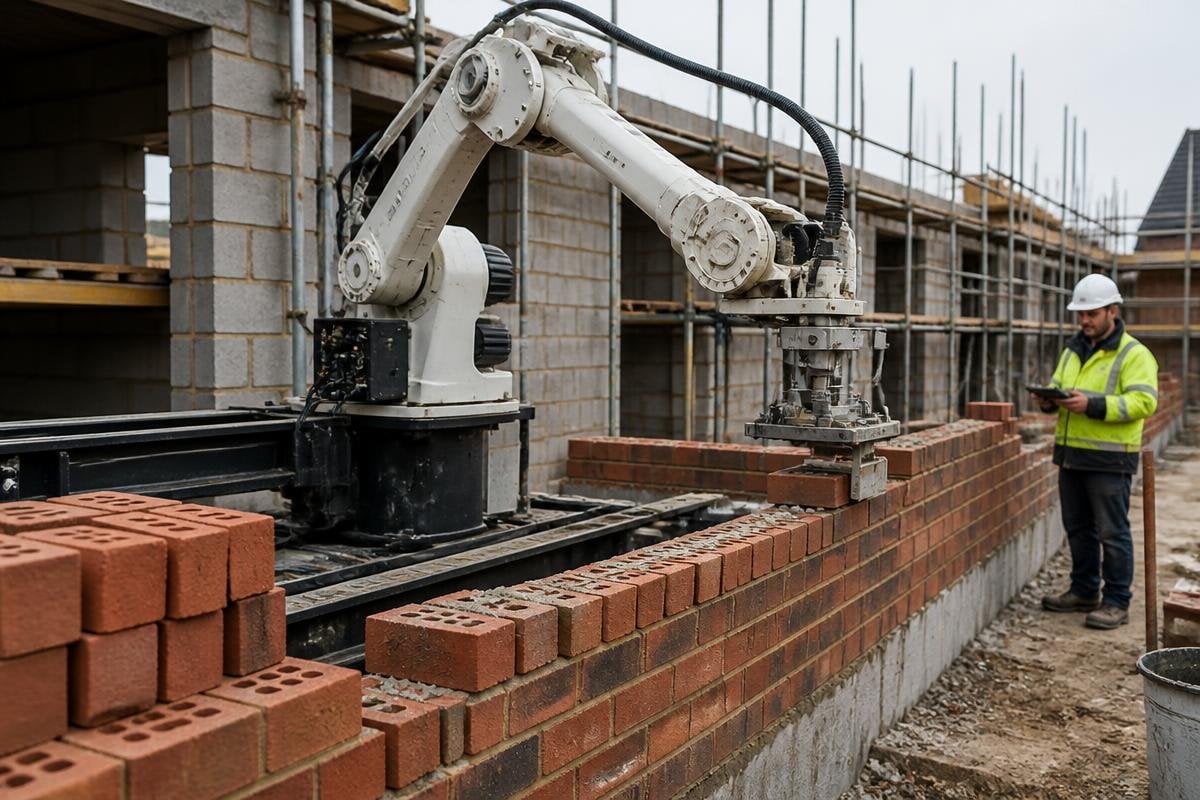
A bricklaying robot can look useful in a short video. The harder test starts when the wall is uneven, the bricks vary, and the crew needs the machine to work through a full shift. For a construction manager, the real question is simple: does the robot build enough wall to justify its cost and the space it takes?
- Measure bricks placed per hour, not video length
- Check how much human work remains around the robot
- Price the full setup, including training and site changes
What the robot has to do
Bricklaying has several linked jobs. A robot must pick up a brick, place it in the right position, apply or work with mortar, and keep the wall line correct. A failure in one step can slow the crew around it.
That makes the robot’s arm only one part of the system. The site also needs a way to bring bricks into reach, keep mortar ready, move the machine as the wall grows, and handle bricks that do not match the expected shape.
A useful test should record the wall’s length and height, the brick size, the mortar method, and the number of workers assigned to the job. Without those details, a claim about output has little value because another site may face a very different task.
Why the rise is hard to measure
A demo can show a clean row of bricks under controlled conditions. A working site adds changes in ground level, weather, delivery delays, shared work areas, and safety rules. Those conditions affect the pace of the whole crew.
The right measure is completed wall area over a defined work period. Record the start and stop times, planned breaks, material delays, machine faults, and every handoff to a person. A robot that places bricks quickly but waits for supplies may add little to daily output.
A report is useful only when it ties a machine to measured site work. Robot24.com robotics coverage can place a bricklaying robot’s output beside its work period, material delays, faults, and human handoffs.
The labor question needs equal care. A robot may reduce repeated lifting or brick placement while still needing people to load materials, inspect the wall, move equipment, and fix errors. The useful comparison is the full crew before and after the robot arrives, measured on the same type of wall.
The cost sits beyond the robot
A purchase price alone won’t show the financial case. Add installation, transport, site preparation, software fees, maintenance, training, insurance, and time spent moving the machine between work areas.
Then compare those costs with the amount of wall completed during paid work hours. A machine that needs two workers nearby may have a different result from one that runs with one operator. The difference belongs in the calculation.
I’d skip any buying decision based on a short demo or a single output figure.
The unproven part matters too. Ask how the system handles damaged bricks, corners, openings for doors and windows, changes to the wall plan, and a stop caused by a person entering the work area. A machine that works only on long, straight runs may still have a narrow place on a large project, but its limits must shape the price.
A site decision guide
Use these checks before a trial or purchase:
- Define the wall: record length, height, brick size, mortar type, corners, and openings.
- Count the crew: list every person who loads, watches, moves, checks, or repairs the system.
- Time the work: measure completed wall area across a full planned shift, including stops.
- Test the awkward parts: include corners, uneven ground, material changes, and a revised wall plan.
- Price the site changes: include power, access, floor space, transport, training, and service.
- Set a pass mark: agree on output, error rate, and safe stop behavior before the trial begins.
This process also gives builders a fair way to compare different machines. Each robot faces the same wall, the same work period, and the same cost rules, so the result says more than a polished clip.
Bricklaying robots may earn a place where walls repeat, materials arrive on time, and the site can keep the machine in position. The next useful proof is a measured work record showing completed wall area, total crew hours, faults, and full cost on one real project.
